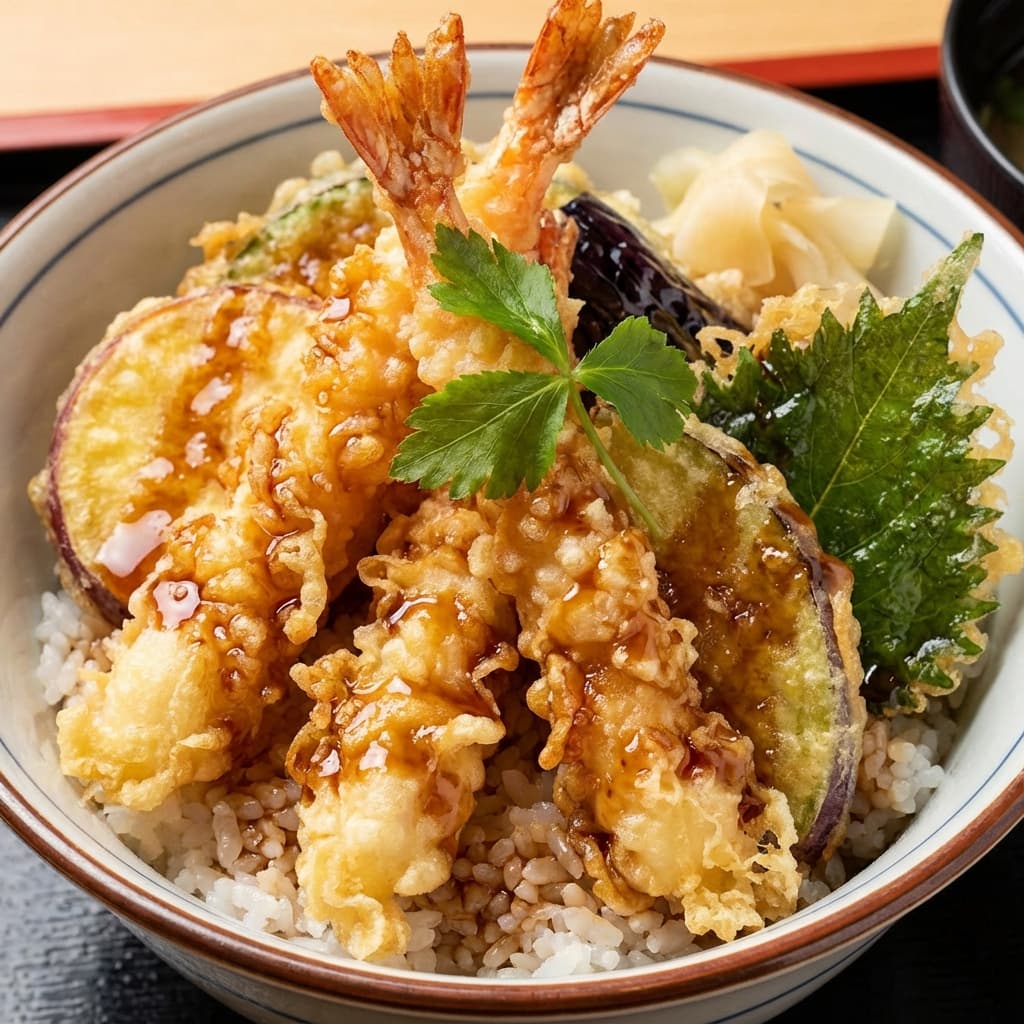
Ten Don (天丼) is the ultimate test of a tempura chef's skill. Achieving that perfect crunch while keeping the interior moist, then balancing it with sauce-dressed rice – it's harder than it looks.
The Tempura Itself
Great tempura is defined by its batter – impossibly light, shatteringly crisp, with no greasiness whatsoever. The best tempura batter is mixed minimally (lumps are acceptable, even desirable) using ice-cold water to prevent gluten development.
Classic ten don typically includes:
- Ebi (Prawn): The star of most ten don. Should be straight (achieved by scoring the underside), crispy-coated, with sweet, succulent meat inside.
- Kakiage: A fritter of mixed vegetables and sometimes small shrimp. Adds textural variety.
- Vegetables: Commonly includes shiso leaf, eggplant, kabocha squash, and green beans.
- Seasonal additions: Lotus root, mushrooms, or white fish depending on what's fresh.
The Tare (Sauce)
Tentsuyu – the dipping sauce that becomes a drizzling sauce in ten don – is a careful balance of dashi, soy sauce, and mirin. It should be savory-sweet without overwhelming the delicate tempura flavors.
Different restaurants take different approaches: some drizzle the sauce over the tempura just before serving, others brush it on, and some serve it on the side. The timing matters – apply too early and the tempura sogens; too late and the rice doesn't absorb enough flavor.
The Texture Challenge
Here's the ten don paradox: you want crispy tempura, but you're putting it on hot rice with sauce. The bottom inevitably softens. Master tempura chefs solve this by:
- Frying to order: Tempura should go directly from fryer to bowl to table. Any delay is death to crunch.
- Strategic placement: Arranging pieces to minimize contact with rice, sometimes using a small rack or extra batter pieces as a buffer.
- Sauce control: Applying sauce judiciously to maintain texture contrast.
How to Eat Ten Don
Speed is your friend. Once served, don't Instagram it for five minutes – eat it. Start with the pieces on top (crispiest), work your way down to the sauce-soaked bottom (where many argue the best bites live).
Some diners dip pieces in extra tentsuyu; others add shichimi pepper for heat. Both are acceptable, though purists might skip additional seasoning on particularly delicate preparations.
Ten Don in Singapore
Tendon Kohaku helped spark Singapore's ten don craze with their accessible, well-executed bowls. Their signature light batter and balanced sauce have won devotees across the island.
The ten don trend has since expanded, with options ranging from food court stalls to high-end tempura restaurants. Price generally correlates with oil quality (sesame oil blends are superior), ingredient freshness, and cooking skill.
Ten Don Red Flags
- • Greasy residue: Good tempura shouldn't leave oil on your fingers
- • Heavy batter: You should taste the ingredient, not just fried dough
- • Pre-fried items: Tempura sitting under heat lamps loses all appeal
- • Overly sweet sauce: Should balance, not dominate