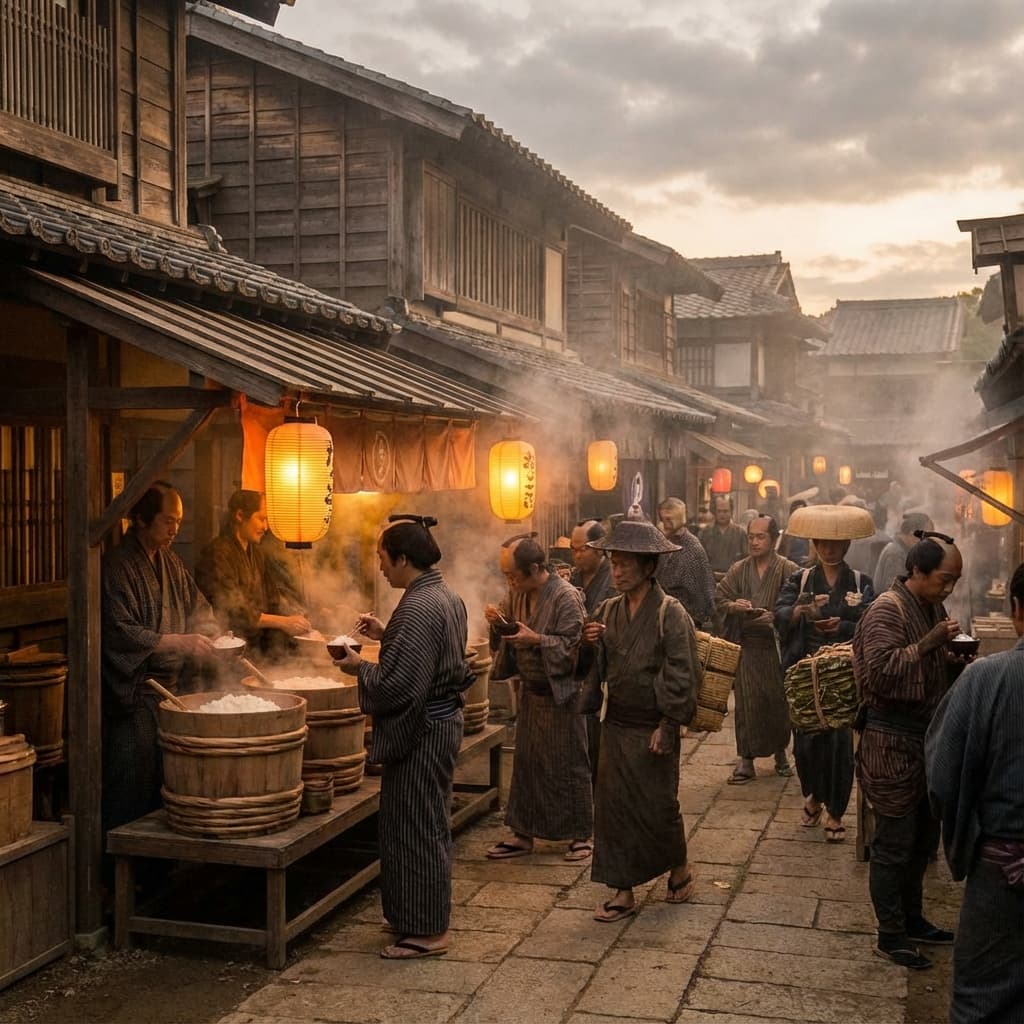
The story of donburi stretches back over 400 years, evolving from a practical solution for busy merchants to one of Japan's most beloved culinary traditions.
The Edo Period Origins (1603-1868)
Donburi's history begins in the bustling streets of Edo (modern-day Tokyo). As the city grew into one of the world's largest metropolises, its working population needed quick, affordable, and filling meals. Enter the donburi – a complete meal in a single bowl that could be prepared rapidly and eaten without ceremony.
The first recorded donburi was Unagi Don (eel bowl), which appeared in the late 18th century. Legend has it that a theater owner, tired of his eel getting cold during long kabuki performances, asked a chef to serve it over hot rice in a covered bowl. The concept was revolutionary – the rice kept the eel warm while absorbing its delicious tare sauce.
The Meiji Revolution (1868-1912)
The Meiji period brought Western influences to Japan, including beef consumption, which had been taboo for centuries. This gave birth to Gyu Don, the beef bowl that would eventually become Japan's most popular donburi variety.
Katsu Don also emerged during this era, combining the Western-style breaded cutlet (katsu) with the traditional donburi format. The dish became associated with victory and success – "katsu" sounds like the Japanese word for "to win."
Post-War Popularization (1945-present)
After World War II, donburi chains began to emerge. Yoshinoya, founded in 1899 but expanding rapidly in the post-war era, brought Gyu Don to the masses with its affordable, consistent, and quick service model.
The 1980s and 1990s saw the globalization of donburi culture. Japanese chains expanded overseas, while local interpretations emerged in cities like Singapore, where the combination of Japanese food culture and local tastes created unique variations.
Don in the 21st Century
Today, donburi has transcended its humble origins. While budget chains like Sukiya continue the tradition of affordable, quick meals, high-end restaurants have elevated the format with premium ingredients like A5 wagyu, fresh uni, and high-grade tuna.
In Singapore, establishments like Fat Cow represent this evolution, serving luxurious wagyu beef bowls that would have been unimaginable to the Edo-period merchants who first embraced the donburi concept.
Timeline
- 1780s – First Unagi Don appears in Edo
- 1868 – Meiji Restoration allows beef consumption
- 1899 – Yoshinoya founded in Tokyo
- 1913 – Katsu Don invented in Tokyo
- 1982 – Sukiya founded, revolutionizing fast-casual don
- 2000s – Premium donburi trend emerges