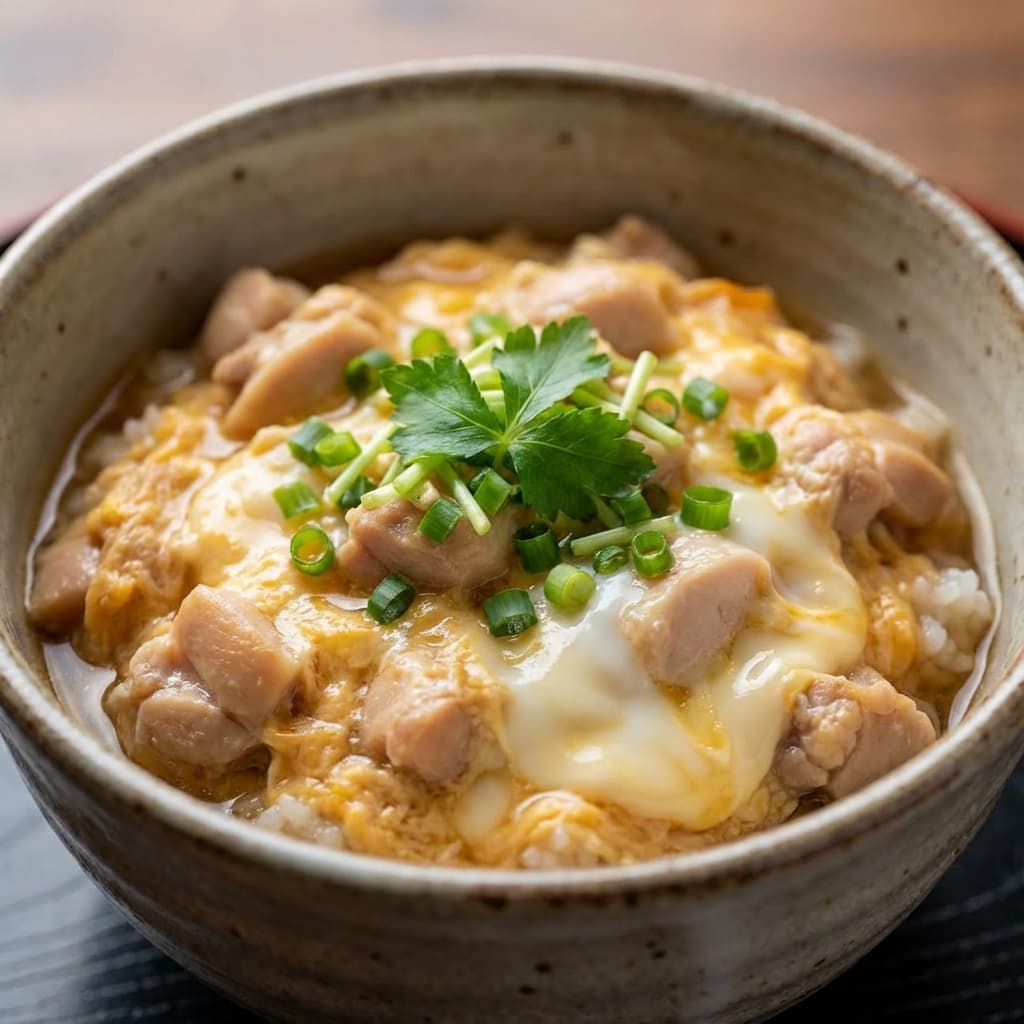
Oyako Don (親子丼) – literally "parent and child bowl" – is Japanese home cooking at its finest. Tender chicken and silky egg, bound together by sweet-savory broth, ladled over rice. It's simple, comforting, and deceptively difficult to perfect.
The Poetic Name
The name refers to the combination of chicken (parent) and egg (child) in the same dish. While some might find this morbid, Japanese food culture tends to embrace such straightforward naming. There's also "Tanin Don" (他人丼, "stranger bowl"), which uses beef or pork with egg instead – because the meat and egg aren't related.
The Art of the Egg
Oyako don is a lesson in egg mastery. The egg should be just barely set, still glistening and slightly runny in the center. It coats the chicken like a blanket, enriching every bite with its silky presence.
Achieving this requires careful technique:
- Timing: The egg is added in two stages – first around the edges, then in the center after the edges begin to set. This creates textural variation.
- Heat control: Cook too long and you get scrambled eggs; too short and it's raw. The residual heat from the broth continues cooking even after removing from flame.
- No stirring: Unlike scrambled eggs, the mixture should be left largely undisturbed, allowing it to set naturally in ribbons and curds.
The Chicken
Thigh meat is traditional and preferred – it stays moist during cooking and has more flavor than breast. The chicken is sliced thin, simmered briefly in the dashi-soy broth with onions until just cooked through.
Some versions add chicken skin for extra richness, or mitsuba (Japanese parsley) for freshness. Premium preparations might use free-range jidori chicken or other specialty breeds.
The Broth
The cooking liquid – dashi, soy sauce, mirin, and sometimes sake – is the soul of oyako don. It seasons the chicken during cooking, then mingles with the egg and soaks into the rice below. Getting the balance right – sweet enough to be comforting, savory enough to be satisfying – is the mark of a skilled cook.
Oyako Don vs Katsu Don
Both feature egg and rice in a similar preparation, but the experience is quite different. Katsu Don is richer and more indulgent; Oyako Don is lighter and more subtle. Oyako Don is what you eat when you want comfort without heaviness, satisfaction without the food coma.
Oyako Don in Singapore
Oyako don is available at most Japanese restaurants but often plays second fiddle to flashier don varieties. Look for it at home-style Japanese restaurants (teishoku specialists) where homey dishes get proper attention.
It's also one of the easiest don to make at home – once you master the egg technique, you can have a satisfying meal on the table in 20 minutes.
Oyako Don Variations
- • Salmon Oyako Don: Salmon and ikura (salmon roe) – a seafood twist on the concept
- • Tanin Don: Uses beef or pork instead of chicken
- • Soboro Don: Ground chicken with scrambled eggs (different style)
- • Green Onion Oyako Don: Heavy on the negi for extra freshness