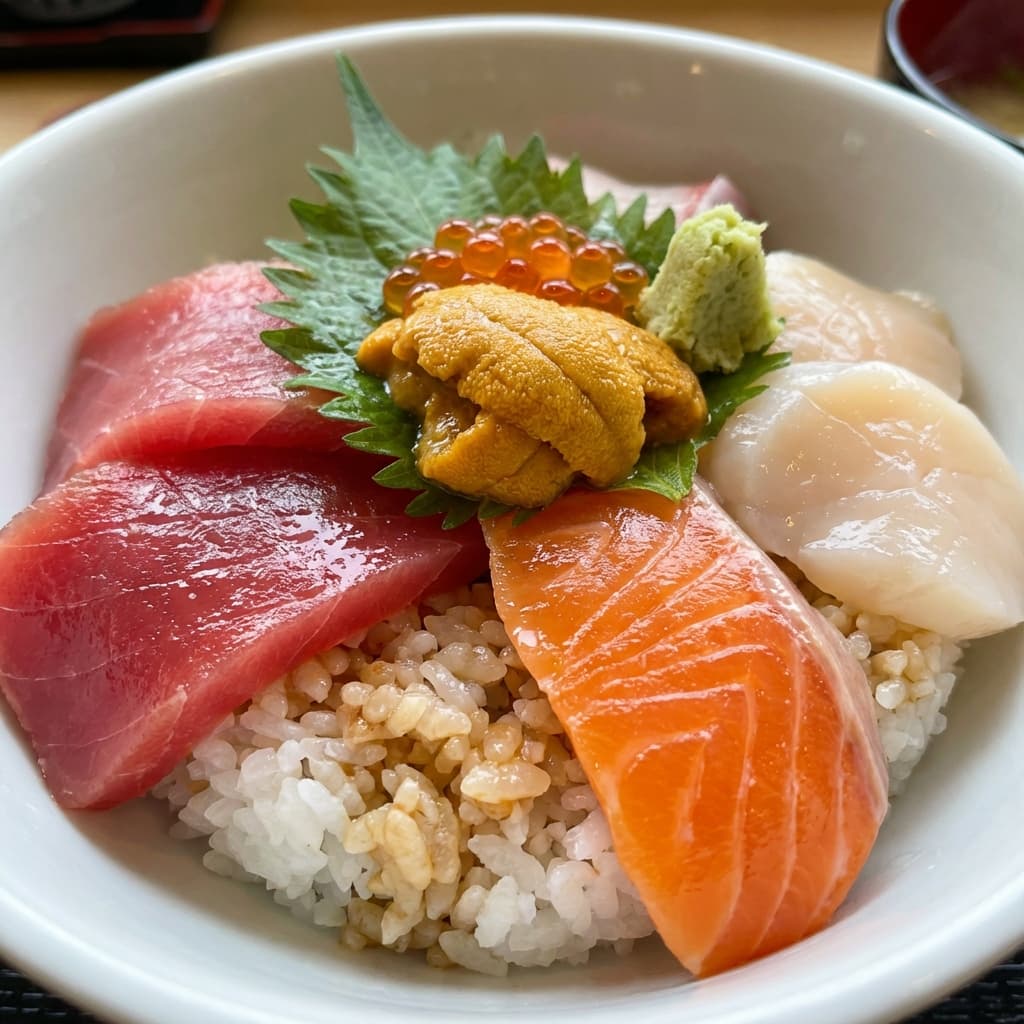
Kaisen Don (海鮮丼) is the jewel of the donburi world – a crown of glistening sashimi atop perfectly seasoned sushi rice. For seafood lovers, there's no more direct path to bliss.
Understanding Kaisen Don
"Kaisen" literally means "seafood," and a kaisen don delivers exactly that – an assortment of raw fish and shellfish arranged artfully over rice. Unlike chirashi sushi (scattered sushi), kaisen don emphasizes generous portions and the bowl format over delicate, piece-by-piece presentation.
The beauty lies in variety. A single bowl might feature salmon, tuna, yellowtail, sweet shrimp, scallop, salmon roe, and sea urchin – each bringing distinct textures and flavors that complement one another.
The Key Components
- Maguro (Tuna): Often including both lean akami and fatty otoro. The backbone of most kaisen don.
- Sake (Salmon): Rich, buttery, and beloved – especially popular in Singapore where Norwegian salmon is plentiful.
- Hamachi (Yellowtail): Clean, slightly sweet, with a satisfying firm texture.
- Amaebi (Sweet Shrimp): Delicate sweetness with a soft, almost creamy texture.
- Hotate (Scallop): Sweet, tender, often served with a touch of citrus.
- Ikura (Salmon Roe): Those glorious orange pearls that pop with briny sweetness.
- Uni (Sea Urchin): The crown jewel – creamy, oceanic, unforgettable. A mark of premium kaisen don.
Signs of Quality
Not all kaisen don is created equal. Here's what to look for:
- Appearance: Fish should glisten but not look wet or slimy. Colors should be vibrant – bright red tuna, deep pink salmon, pearlescent scallop.
- Smell: Fresh sashimi should have almost no smell, or a clean, ocean-like scent. Any "fishy" odor indicates less-than-fresh product.
- Cut: Even, consistent slices show care and skill. Ragged edges suggest rushed preparation.
- Rice: Should be room temperature or slightly warm, never hot (which would cook the fish) or cold (which hardens and loses flavor).
How to Eat Kaisen Don
There are two schools of thought:
The Purist Approach: Eat each piece of fish separately, appreciating its individual character. Pick up a piece, dip lightly in soy sauce (fish-side down, never rice-side), add a touch of wasabi if desired, then take a bite of rice separately.
The Bowl Approach: Drizzle soy sauce over the entire bowl, mix wasabi into a small dish of soy sauce for dipping, and enjoy fish and rice together in each bite. This is more common in casual settings.
Kaisen Don in Singapore
Singapore's position as a seafood hub makes it ideal for kaisen don. Fish is flown in from Tokyo's Tsukiji and Toyosu markets, often arriving within 24-48 hours of auction. Local specialists like Kei Kaisendonhave built reputations on sourcing and freshness.
Expect to pay more for kaisen don than other don varieties – the premium for fresh, quality sashimi is significant. Budget options exist but typically feature lower-grade fish or smaller portions.
Kaisen Don Glossary
- • Bara Chirashi: "Scattered" style with cubed fish
- • Tekka Don: Tuna-only version
- • Negitoro Don: Minced fatty tuna with green onion
- • Kaisendon Omakase: Chef's selection, often the best value