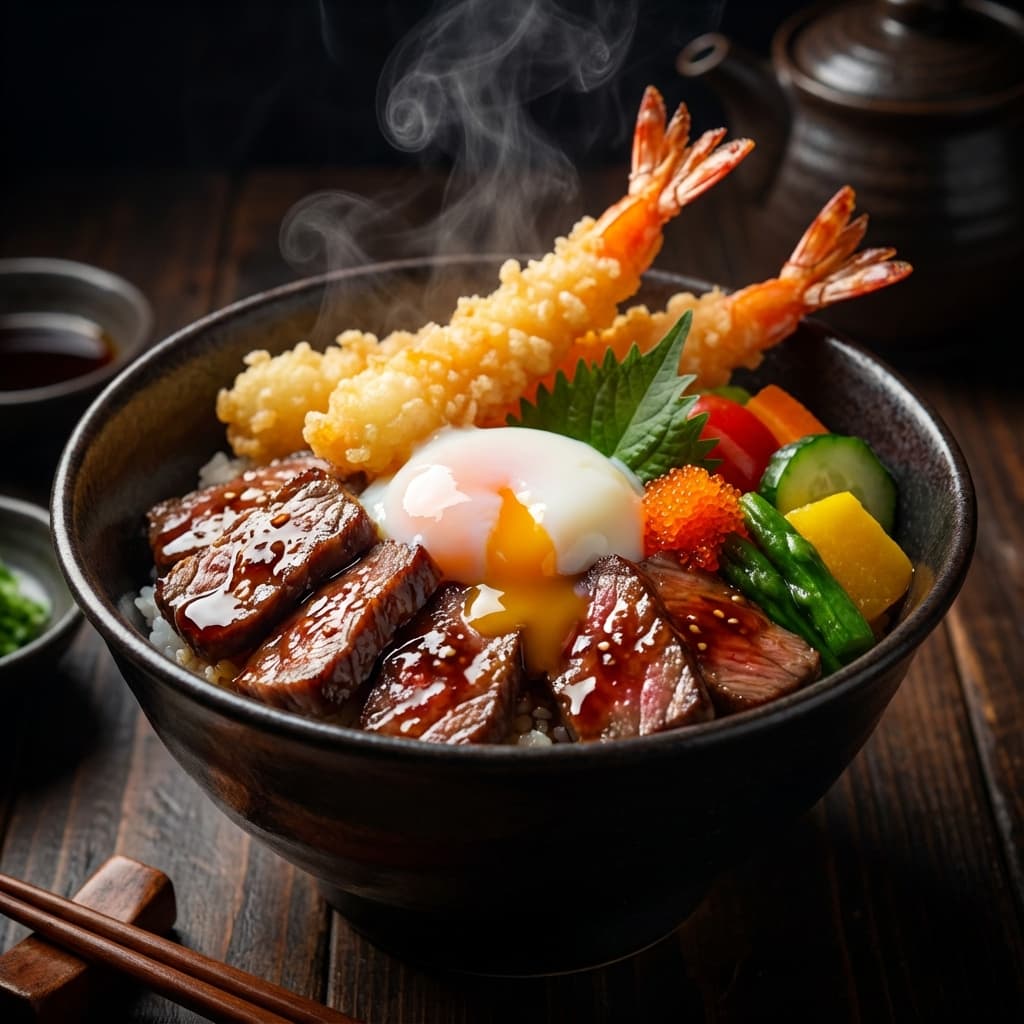
From its origins in Edo-period Tokyo to tables across six continents, donburi has proven remarkably adaptable. Each culture has embraced and transformed this simple concept – rice, topping, sauce – into something uniquely their own.
Singapore: A Don Paradise
Singapore holds a special place in the global don scene. With one of the highest concentrations of Japanese restaurants outside Japan, the city-state offers everything from authentic chain experiences to innovative local interpretations.
What makes Singapore unique is the influence of local food culture. You'll find don with sambal-spiced toppings, laksa-inspired broths, and even chili crab-topped bowls. The hawker culture has also democratized premium don – high-quality bowls at accessible prices in food courts and coffee shops.
Japanese chains like Sukiya and Yoshinoya maintain authenticity while adapting portion sizes and spice levels to local preferences. Meanwhile, homegrown concepts push boundaries with wagyu beef sourced directly from Japanese prefectures.
Hawaii: The Poke Bowl Connection
Hawaii's poke bowl, now a global phenomenon, shares DNA with Kaisen Don. The large Japanese immigrant population brought donburi traditions, which merged with native Hawaiian raw fish preparations.
Today's poke bowls often sit on sushi rice with toppings like edamame, seaweed salad, and sriracha mayo – a distinctly Hawaiian-Japanese-American creation that traces its lineage directly to the donburi tradition.
Korea: Hoedeopbap and Beyond
Korea's hoedeopbap (raw fish rice bowl) predates significant Japanese culinary influence, but modern Korean don culture shows clear cross-pollination. Korean-Japanese fusion dons feature gochujang-marinated beef, kimchi toppings, and sesame-oil-dressed rice.
The Korean love for bold, spicy flavors has created unique variations that would seem foreign in Tokyo but feel completely natural in Seoul – and increasingly in Korean restaurants in Singapore's Tanjong Pagar district.
United States: The Fast-Casual Revolution
America transformed donburi into a fast-casual concept. Chipotle-style assembly lines now serve "build your own bowl" concepts where customers choose their rice, protein, and toppings. While purists might scoff, these adaptations have introduced millions to the joy of rice bowls.
Premium Japanese beef brands have also found an eager American market, with high-end restaurants serving A5 wagyu don at prices that would shock Tokyo diners. The American willingness to pay premium prices for premium ingredients has actually influenced the Japanese market in return.
Europe: The Slow Adoption
European embrace of donburi has been slower but steady. London, Paris, and Amsterdam now boast dedicated don restaurants, often positioning them as healthy, balanced meals for the lunch crowd.
The European interpretation tends toward lighter preparations – less sauce, more vegetables, smaller portions. It's donburi filtered through European sensibilities about health and portion control.
Australia: Quality Over All
Australia's don scene reflects its broader food culture: an obsession with quality ingredients and willingness to pay for them. Sydney and Melbourne's don restaurants often source premium local seafood and meats, creating Australian-Japanese hybrids that rival Tokyo's best.
Global Don Variations
- • Singapore: Chili crab don, laksa don, local fusion concepts
- • Hawaii: Poke bowls, spam musubi rice bowls
- • Korea: Gochujang beef bowls, kimchi-topped dons
- • USA: Build-your-own concepts, premium wagyu experiences
- • Australia: Local seafood kaisendon, sustainability-focused