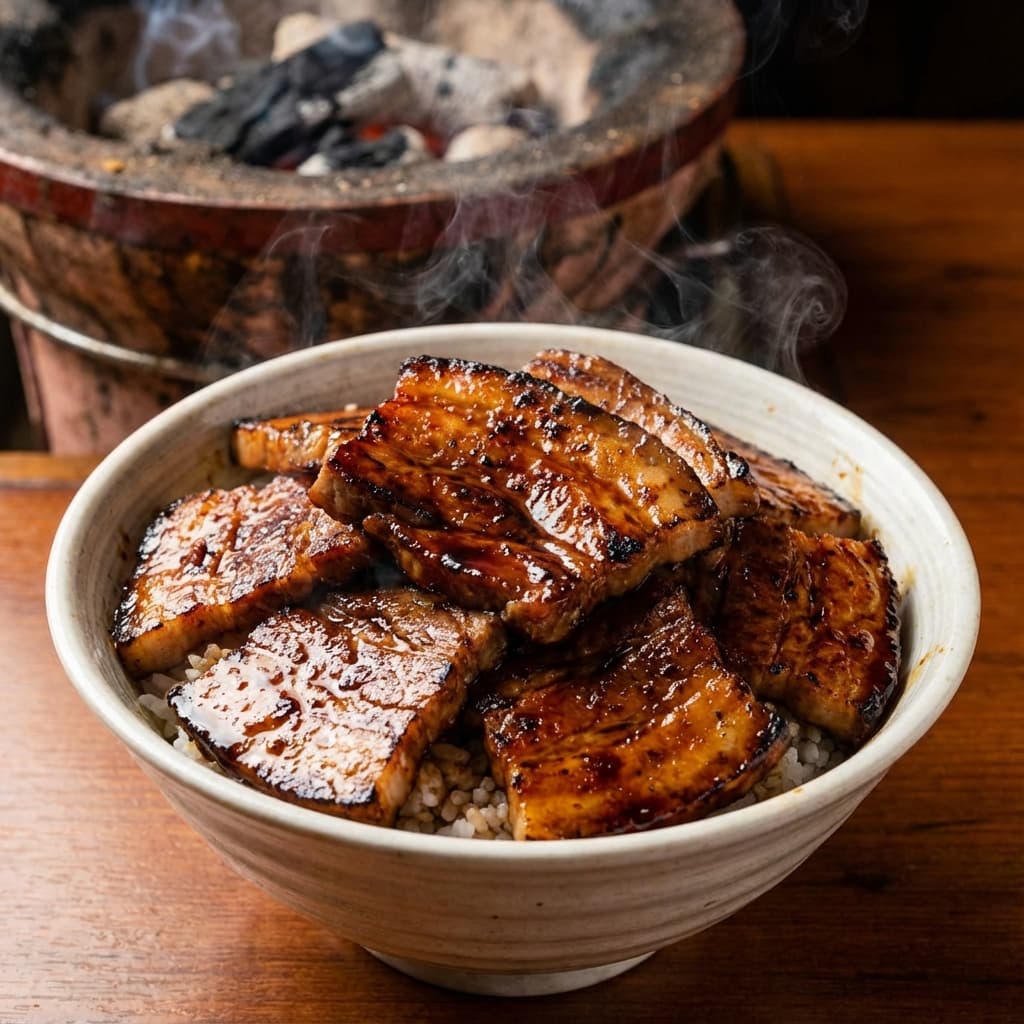
Buta Don (豚丼) is Hokkaido's answer to the beef-centric don culture of mainland Japan. Where Gyu Don is simmered and saucy, Buta Don is grilled and caramelized – showcasing pork at its most robust and flavorful.
The Hokkaido Heritage
Buta don originated in Obihiro, a city in eastern Hokkaido, in 1933. The story goes that a local restaurant owner wanted to create an affordable, filling meal for the farmers and laborers of the region. Using locally raised pork – Hokkaido is known for excellent pork production – he developed what would become a regional icon.
The dish spread throughout Hokkaido and eventually to the rest of Japan, though Obihiro remains the spiritual home. Visitors to Hokkaido often make pilgrimages to the original restaurants serving authentic preparations.
What Sets Buta Don Apart
Unlike the thin-sliced, simmered beef of Gyu Don, authentic Buta Don features:
- Thick-cut pork: Usually pork loin or belly, sliced 5-8mm thick. Substantial pieces you can really sink your teeth into.
- Charcoal grilling: Traditional preparation uses charcoal for that smoky, caramelized exterior while keeping the interior juicy.
- Sweet-savory tare: Thicker and sweeter than Gyu Don sauce, with caramelized notes from the grilling process.
- Layered presentation: Pork is often layered between rice, with more on top, ensuring sauce permeates throughout.
The Perfect Bite
A well-made Buta Don delivers contrasts in every bite: the charred edges against the tender interior, the sweet-savory glaze against the clean rice, the slight chew of the pork against the soft grains. It's hearty without being heavy, rich without being greasy.
The tare typically includes soy sauce, mirin, sake, and sugar – similar to teriyaki but often with proprietary additions. Some restaurants add garlic or ginger for depth; others keep it simple to let the pork shine.
Buta Don vs Gyu Don
The comparison is inevitable:
- Meat treatment: Buta Don grills substantial cuts; Gyu Don simmers thin slices.
- Sauce approach: Buta Don glazes and caramelizes; Gyu Don braises in liquid sauce.
- Flavor profile: Buta Don is sweeter and smokier; Gyu Don is more savory and dashi-forward.
- Origin: Buta Don from Hokkaido; Gyu Don from Tokyo.
Buta Don in Singapore
Butahage brought authentic Hokkaido-style Buta Don to Singapore, charcoal-grilling their pork to order using traditional Obihiro techniques. The queues speak to its quality and authenticity.
Beyond specialists, look for Buta Don at Japanese restaurants with strong Hokkaido connections or those emphasizing charcoal grilling. The preparation method is key – pan-fried versions, while acceptable, miss the smoky depth of charcoal.
Buta Don Toppings
- • Onsen tamago: Soft-cooked egg adds richness
- • Beni shoga: Pickled ginger cuts through the sweetness
- • Shredded nori: Adds umami and visual appeal
- • Extra tare: For those who like it saucy